


-
Good Looking Dashboards in Power BI
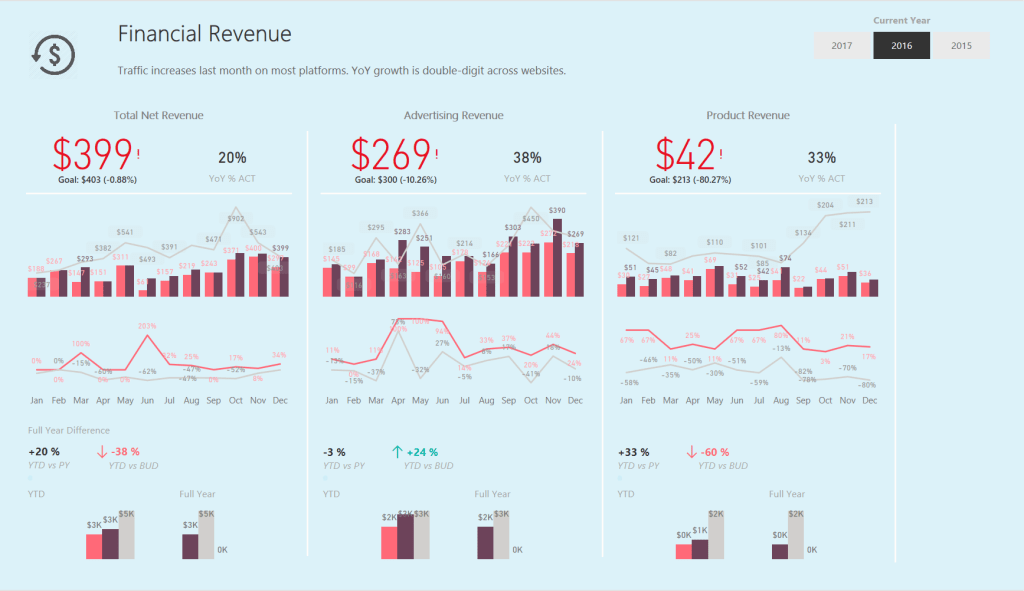
Would you like to be able to turn raw data in from an Excel, CSV file, or a database into a nice looking dashboards. For example, a dashboard like the one above? Or, would you like to migrate your existing excel dashboards like the one below to a an analytical tool (like Power BI)? Well,…
-
Pareto rule in DAX (refreshed)
Quite some time ago, before all the improvements of DAX, I wrote a post on how to create a Pareto chart in Power BI. Now, it’s time for a re-run with the more recent features of DAX, mainly window functions! So, let’s try to write the Pareto cumulative sum of a metric (in the example…
-
Aggregations in Power BI
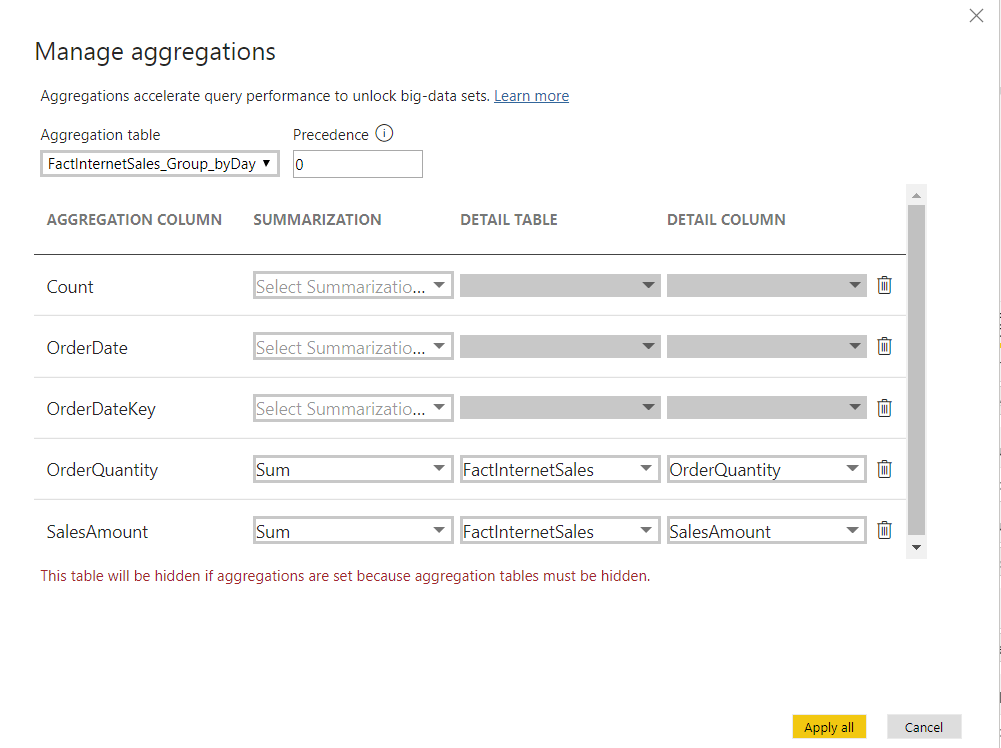
There are three main points of advantages in using aggregations (what we can get from the official documentation): Better query performance over big data Optimized data refresh Balanced architectures First, I connet to the AdventureWorksDW database. We choose a couple of tables (fact + dimension): Connect the tables into a data model Now, to have…
-
Non-linear Time Visuals
Sometimes a requirement in a project is to have visual that represents a trend over time. Easy. Value, on the axis some time dimension values and voila! Easy as pie. Well, however, then there’s the client that is/was used to seeing trends and the comparison versus some previous value, that is also not from the…
-
Camel Case Column Renaming – The new Way in #PowerBI #PowerQuery
A new splitter function has been discovered in Power Query (by Chris Webb and also others probably) which is not in the highlight notes of the February 2019 PBI release, but it is a very nice addition – Splitting Text By Character Transition. So, I had an adequate use case some time ago when I didn’t…
-
Row Store to Column store… Story
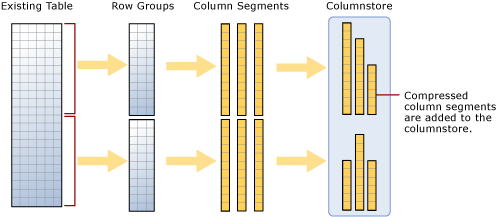
First of all, defining the terms, a row store table or index is a classical table without any index (heap) or with a CI (clustered index) in a row store format. This was not regularly mentioned or discussed, because it was the only way for years…(decades…). Except starting with SQL Server 2014 it was the…
 The BI Journey